
Small Farm Direct Marketing
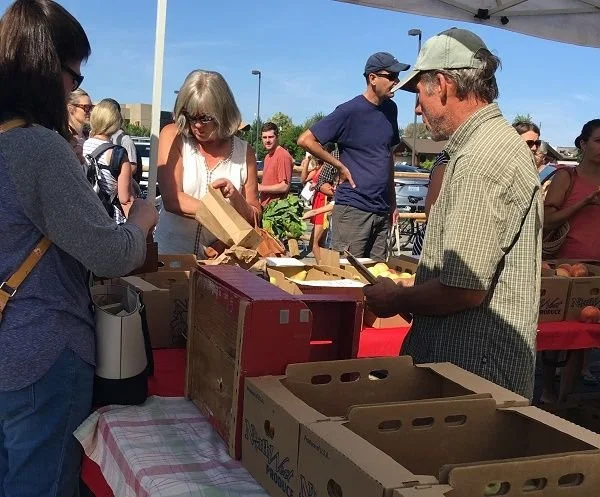
Direct marketing refers to selling that is based on a personal, one-to-one relationship that ties farmers and consumers together. Many times this relationship is face-to-face, like at farmers' markets. Other times, the consumer and farmer may not actually meet, for example, Internet sales.
How Small Scale Farmers Can Use Direct Marketing to Their Advantage
Competing solely on price is rarely feasible for small scale farmers. Farmers who accept the lowest price for their products must have the lowest costs. Larger farms can almost always produce high volume, uniform products more cheaply than smaller farms.
While small farmers cannot effectively compete with large scale operations on price, their businesses are uniquely positioned to compete on other, non-price factors. Competing on non-price factors means that farmers must offer their customers something they want but cannot buy at the grocery store, or anywhere else. Differences can include: convenience, flavor, variety and novelty.
Convenience Ready-to-eat salad mix is an example of products that are more convenient for consumers and could be direct marketed by small-scale producers effectively. Selling produce or meat with recipes and serving suggestions is another way that farmers can make their products more convenient than what is sold at the grocery store.
Flavor: Consumers often list taste and freshness as the top reasons for buying directly from farmers. Producers who get their products to consumers the same day they are harvested will always win on this issue. Also, small scale producers can pay more attention to detail, which often results in a more flavorful product.
Variety: Small farmers can produce 20 different varieties of tomatoes, or grow a multitude of vegetables, flowers and raise livestock. Small farms can diversify in a way that larger farms do not, and offer their consumers a wide variety of products.
Novelty: This ties into the variety and specialty issues. Farmers who are tuned into their customers' preferences are prepared to respond to those preferences with their products.
Specialty Products: Labeling can distinguish your unique products from the generic. "Eco-labels" are a good example of this: locally grown, certified organic, grass-fed or free-range. When consumers purchase products with these labels, they are expressing preferences; they are "voting with their dollars."
Direct Marketing Alternatives for Small Farmers
There are a variety of ways that small scale farmers reach their customers with direct marketing. Some may be more suited to your farm and products than others. For many farmers, a combination of several marketing outlets is effective. Specific examples of direct marketing strategies follow below along with a breakdown of their advantages and challenges:
U-Pick
* No harvest costs
* No transportation costs
* No intermediary
* Crop/Product mix is not critical * Location is critical
* Legal liabilities
* Intrusion on family life
* Parking and staffing
* Limited growth potential and product value
Roadside Stand
* No intermediary
* No one on your farm
* Can re-sell products you don't raise
* Long potential season, depending on the crop mix
* Usually limited transportation and packaging * Location is critical
* Appearance, upkeep of the stand
* Advertising
* Crop/Product mix
* Staffing - long business hours
* Parking and traffic
Farmers' Market
* No intermediary
* No one on your farm
* Product mix can be supplied by other vendors
* Networking opportunity
* Requires farmer to be good salesperson
* Can be time intensive
* Packaging and presentation are important
* Distance to market
* Market fees
* Market season and days may not fit your needs
* Competition among vendors
Internet or Mail Order
* Reduced physical infrastructure needs
* No one on your farm
* Very flexible hours (weekends and evening are fine!)
* Growth is virtually (no pun intended) unlimited * Management of web site
* Freshness advantage may be lost - not appropriate for extremely perishable items
* Payment mechanism and security of transactions
* Packaging is critical
* Shipping cost and reliability
CSA and Subscription
* Up-front payments help with cash flow
* Income doesn't depend on weather (farmers market) or crop prices (retail)
* Acts as an "insurance policy" in case of crop failure in the case of CSAs
* May help with labor shortage; many CSA members volunteer on farm
* Satisfied members are great advertising * Hard "sell" because of the up-front cost to the consumer
* Requires quality consistency with variety of products
* Member turnover
* Requires highly organized farmer and "core group" of helpers
* Delivery logistics can be complicated
Cooperative Marketing
* Large potential for growth
* Pooled resources - purchases, advertising, transportation, etc.
* Product mix and variety of group is greater than any one producer
* Little added infrastructure or demand on your farm * Now you're part of a group - you may not like all of the decisions
* Legal costs and time to establish a co-op
* Management is critical - hiring professionals may be the best route
* Competition among members (prices go up so I decide to sell my stuff somewhere else, for example)
Consumer Cooperatives
* Stable, non-volatile market
* High growth potential
* Farmer gets high portion of food dollar
* Small farmer investment
* Farmers are consumers too! * Requires organization of or by consumers
* High degree of management required
* Staff/personnel issues
* Legal responsibilities
* Formal organization with rules and regulations, just like a grocery store
Institutional Markets
* Non-volatile market
* Very long planning cycle (up to a year in advance)
* High potential for growth in Florida, with the importance of cruise lines, amusement parks, etc. * Up front legwork - contacts
* May require that farmers or group of farmers meet regulatory requirements
* Failure to deliver is a disaster
* May be suitable for a limited number of products
* Transportation, delivery
* Requires large and consistent volume

